In short
A smoke detector is mandatory in Estonia: under § 32(3) of the Fire Safety Act, the owner of a house or flat must fit a standalone smoke detector in at least one room, and the fine for breaking this rule can be up to 300 fine units. The detector goes on the ceiling, on every floor and near the bedrooms, but not above the cooker or next to the bathroom door. A smoke detector connected to your phone (56 € or 2.48 €/month) sends an alarm even when nobody is home.
A smoke detector has a simple job: to warn people early enough to get out in time. This matters most at night, because you don’t notice smoke when you are asleep. But a standard beeper only helps the people who are at home and can hear it. This post covers what the law requires, where to put the detector and when it is worth choosing one that also alerts your phone.
Is a smoke detector mandatory?
Yes. § 32(3) of the Fire Safety Act says that the owner of a residential building or flat must equip at least one room with a standalone fire alarm detector, in other words a smoke detector. Under § 52 of the same Act, breaking this rule can be fined up to 300 fine units. The rule applies to owners of both flats and houses.
The law sets the minimum, which is one detector. In a two-storey house or a flat with a long corridor, that is usually not enough: if a fire starts at the other end or on the other floor, the smoke reaches the only detector too late.
Where should a smoke detector go?
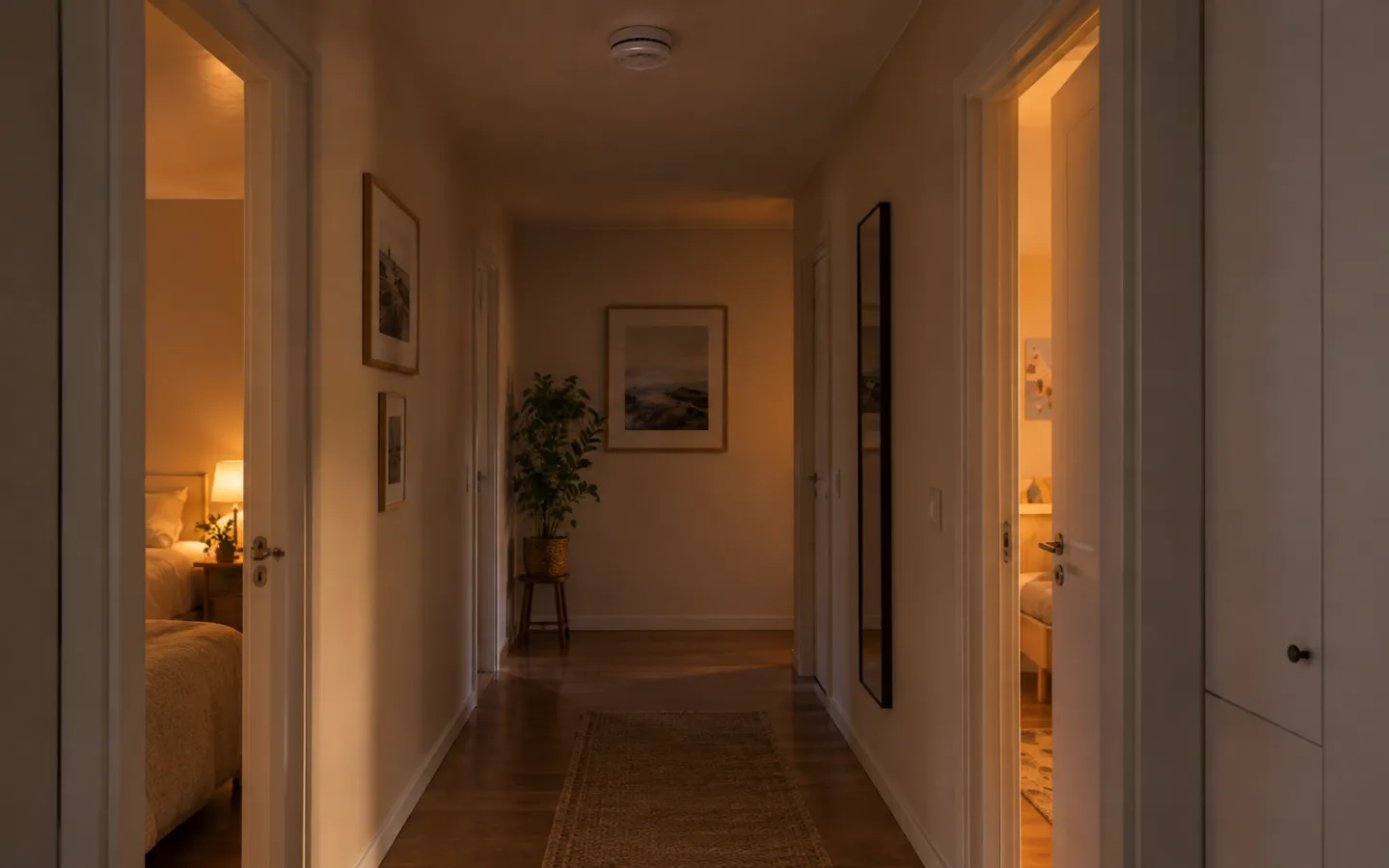
- On the ceiling, in the middle of the room. Smoke rises and spreads under the ceiling. On a wall or in a corner of the ceiling, it reaches the detector later.
- On every floor. In a two-storey house, at least one detector downstairs and one upstairs, ideally near the stairs.
- Near the bedrooms. In the corridor you use to get out of the bedrooms, or in the bedroom itself.
- In a room with a stove. During the heating season, when the stove or fireplace is lit every day, this is one of the riskiest places in the home.
And where not to put it: above the cooker, next to the bathroom door, or near a vent or a window that opens. Cooking steam and shower steam cause false alarms, and a draught carries the smoke past the detector.
| Home | How many detectors | Where |
|---|---|---|
| One-room flat | 1 | ceiling of the room or hallway |
| Two- or three-room flat | 1–2 | bedroom corridor, living room |
| Single-storey house | 2 | bedroom corridor, room with a stove |
| Two-storey house | 2–3 | every floor, by the stairs, room with a stove |
What is the difference between a standard and a connected smoke detector?
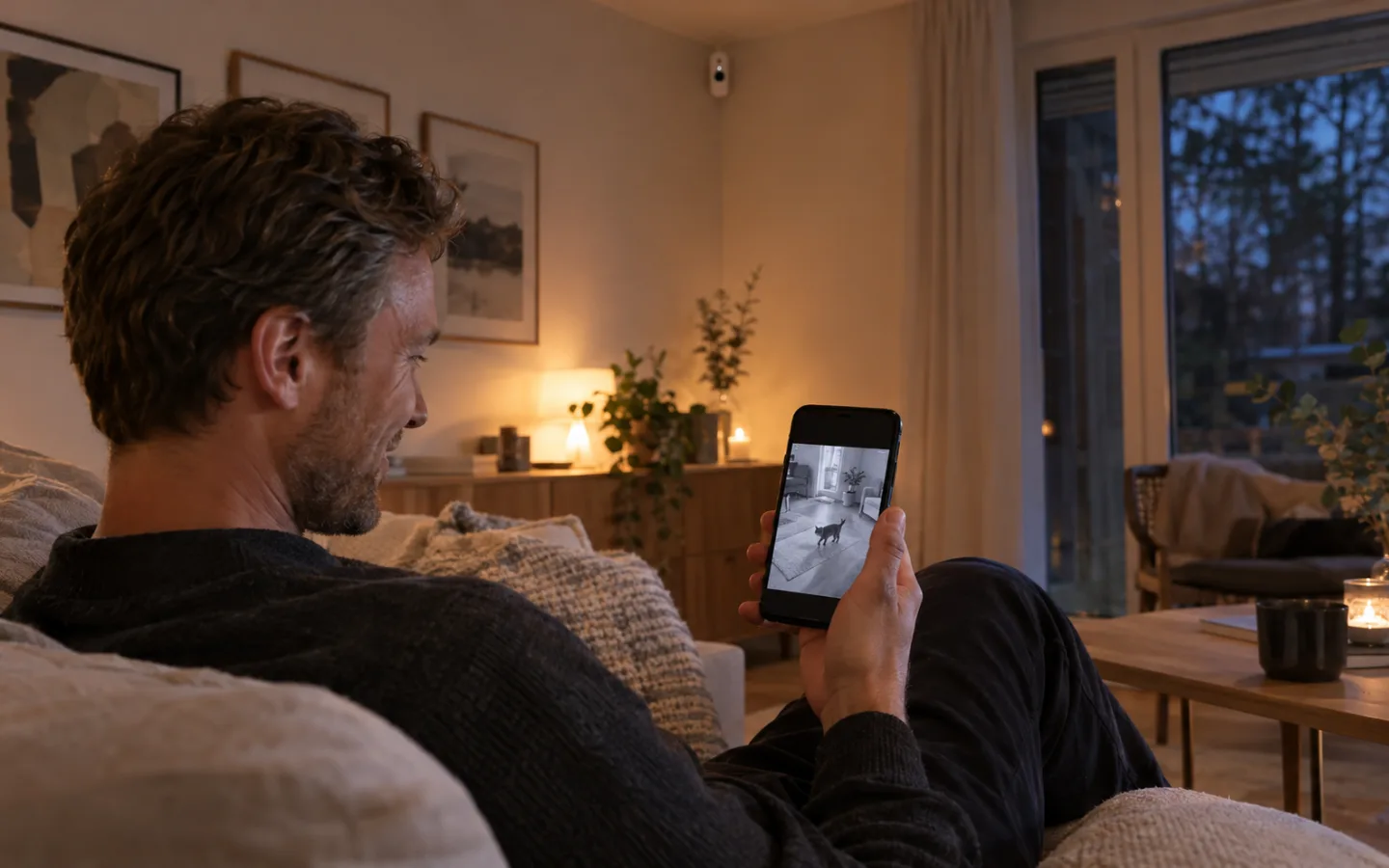
A standard standalone smoke detector is a battery-powered beeper. It meets the legal requirement and wakes up whoever is at home. If nobody is home, it beeps in an empty room. In a flat, a neighbour might hear it at best. In a house or summer cottage, often nobody does.
A connected smoke detector is part of an alarm system. It also makes a loud sound (an 85 dB siren in the detector itself), but in addition the hub sends an alarm to your phone and to all the users you have added. The app shows which detector went off and when. The hub has a backup battery and a SIM card, so the notification goes out even if the power or internet is down.
| Standard beeper | Connected smoke detector | |
|---|---|---|
| Sound in the detector | yes | yes, 85 dB |
| Notification to your phone | no | yes, to all users at once |
| When nobody is home | nobody hears it | the alarm reaches your phone |
| Several detectors | each one on its own | all under one hub (up to 96 devices) |
| Power cut | runs on its battery | hub has a backup battery and SIM card |
| What you can see afterwards | nothing | which detector and what time, in the app |
When is a smoke detector connected to your phone worth it?
- Nobody is home during the day: the adults are at work and the children at school.
- Your house has a stove or fireplace that stays warm while you are away.
- A summer cottage or country house where nobody lives in winter, but the electricity and heating are on.
- An older relative lives alone and you want to know if a detector goes off in their home.
If you already have an alarm system, you don’t need a separate app or a separate device for fire safety. The same hub, the same app and the same users get both intruder and fire alarms, and the app shows straight away which one it was.
Tip. If your kitchen and living room are one space, don’t put the smoke detector above the cooker. Put it at the living room end, as far from the cooker as possible. That way real smoke reaches the detector, but steam from the frying pan doesn’t cause a false alarm.
How do you check a smoke detector?
With a standard smoke detector, press the test button once a month and change the battery when the detector starts giving short beeps. With a connected detector, the app shows the battery level, so a flat battery doesn’t come as a surprise. Dust and cobwebs on the detector’s openings can reduce its sensitivity, so wipe it with a dry cloth now and then. The start of the heating season, when you light the stove for the first time, is a good moment to check all your detectors.
How much does a smoke detector that alerts your phone cost?
If you already have a GSMvalve alarm system, the smoke detector is added to the same hub: 56 € to buy or 2.48 €/month to rent. When you buy, an extra device doesn’t raise the monthly fee (9.18 €). The Start package already includes one smoke detector, the Plus package a smoke detector and a combined detector, and the Premium package two smoke detectors.
If you don’t have an alarm system and only want fire safety, the Smoke Alarm package fits: a hub and a combined smoke, carbon monoxide and temperature detector. You install it yourself, and the SIM card is activated and the account set up remotely for 18.60 €.
| Option | Buy | Rent |
|---|---|---|
| Smoke detector (for an existing system) | 56 € | 2.48 €/month |
| Smoke, carbon monoxide and temperature detector | 82 € | 3.72 €/month |
| Smoke Alarm package (hub + combined detector) | 254 € + monthly fee 9.18 € | 12.40 €/month |
Prices include VAT. Rent covers the devices, app, mobile connection and customer support. It runs for at least 3 months, and you give 3 months’ notice to end it.
Frequently asked questions
How many smoke detectors does a home need?
The Fire Safety Act requires at least one smoke detector. We recommend one on every floor and one near the bedrooms. In a two-room flat one is usually enough, while a two-storey house needs at least two.
Can a smoke detector go in the kitchen?
Not above the cooker, because cooking steam and smoke from frying cause false alarms there. Put the smoke detector in the corridor outside the kitchen door or, with an open-plan kitchen, at the end furthest from the cooker.
Does a connected smoke detector work during a power cut?
Yes. The GSMvalve smoke detector runs on a battery, and the hub has a backup battery and a SIM card, so the alarm reaches your phone even during a power cut or internet outage.
What is the fine for not having a smoke detector?
Under § 52 of the Fire Safety Act, breaking the smoke detector rule can be fined up to 300 fine units. The rule itself is in § 32(3) of the same Act.
Read also: the smoke detector on the devices page · Smoke Alarm package to install yourself · how a wireless alarm system works
Written by the GSMvalve team
Still have questions?