In short
A pet-immune motion sensor ignores animals up to 30 kg if it is mounted at 2.1 m, pointed towards the door, and there is no window, radiator or tall furniture the cat can climb in its field of view. Most false alarms come from the height and angle, not from the sensor.
- Height 2.1 m: not higher, not lower
- Angle towards the door, window and heating behind it
- The cat’s favourite spot (top of a cupboard, windowsill) out of the sensor’s view
The motion sensor is the most useful device in a home alarm, and also the one that causes the most false alarms. The same sensor in the same room can run for years without a single false alarm or set one off every night. The only difference is how it is installed. If you have a pet, three things matter: height, angle and what moves in the sensor’s field of view.
1. How high should a motion sensor go?
2.1 metres from the floor. This is the manufacturer’s requirement, not a suggestion. A pet-immune sensor tells an animal from a person by the size and height of its heat signature. If the sensor is at 2.4 m, the viewing angle changes and it reads a cat sitting on a table as a standing person. Lower down (1.8 m), it starts reacting to a dog moving across the floor. Our technician measures the height with a tape measure, not by eye.
2. Which way should a motion sensor face?
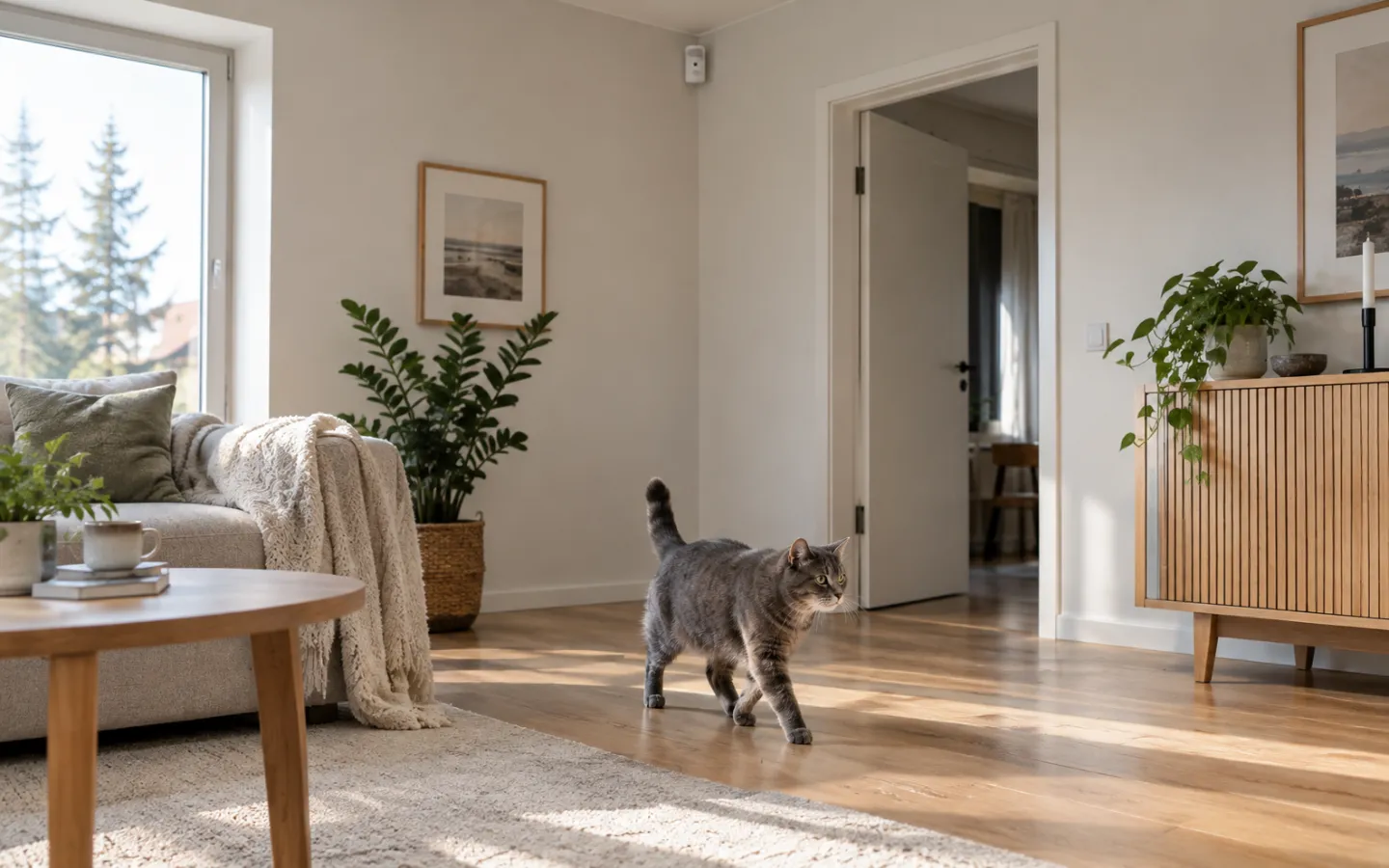
Towards the door, which is where an intruder would come from. The sensor reacts to changes in heat in its field of view. So a window with the sun shining in, or a radiator with warm air rising above it, can create “movement” even in an empty room. Put the sensor in a corner where the window and radiator are behind it or to the side, and the door is straight ahead. One sensor covers about 30 m², which is a normal living room.
Tip. If your cat’s favourite spot is on top of a cupboard right in the sensor’s view, switch that sensor off in night mode and keep the door and window sensors armed. At night those matter most anyway. During the day, when nobody is home, the sensor can stay armed.
3. Is a motion sensor with camera pet-immune?
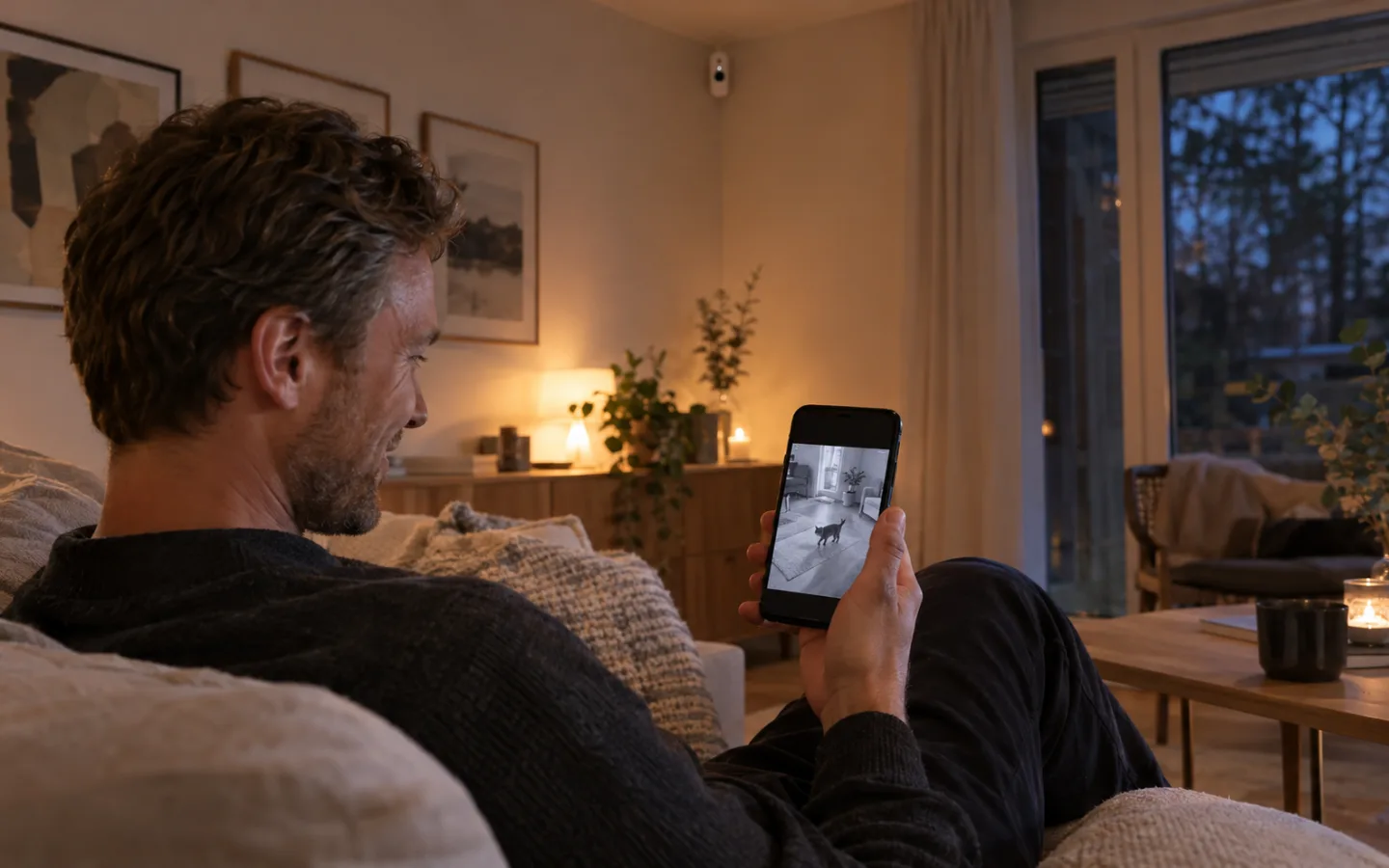
Not quite. When an alarm goes off, a motion sensor with camera sends a series of photos to your phone, so you can see straight away whether it is the cat or a stranger. But its motion detection is not pet-immune in the same way as a standard sensor. A sensible split: a motion sensor with camera in the hallway, where the cat can’t get to, and a pet-immune sensor in the living room.
Most false alarms are not caused by a faulty sensor but by the wrong height and angle. Getting them right takes a couple of minutes during installation.
What if you still get false alarms?
Check in the app which sensor went off and at what time. If it is the same sensor at the same time of day, the cause is usually the sun or the heating. Write to us and we will agree a time for a technician to move the sensor. A technician visit costs from 35.20 €, also when you rent.
Frequently asked questions
How big an animal does a pet-immune motion sensor ignore?
Our motion sensor is pet-immune up to 30 kg, which covers cats and most dogs. With a bigger dog, switch the motion sensor off in night mode and use the door and window sensors.
Can a cat set off the alarm system?
A correctly installed pet-immune sensor does not react to a cat moving across the floor. An alarm can go off if the cat climbs up high in the sensor’s view (a cupboard, a shelf), so the sensor is pointed in a way that keeps those spots out of its view.
Does a motion sensor work in the dark?
Yes. The sensor detects heat, not light, so it works in complete darkness. A motion sensor with camera takes photos in the dark using infrared light.
Read also: the motion sensor on the devices page · how the system works · Start package for flats
Written by the GSMvalve team
Still have questions?