
In short
Wireless or wired alarm system? For a finished flat or house, wireless is usually the better fit: installation is one visit of a couple of hours, no cables are run and you can take the system with you when you move. A wired system makes sense when a house is still being built and the cables can go into the walls before finishing, or for a very large site. A wireless hub handles up to 96 devices and, with its battery and SIM card, keeps working during a power or internet cut.
GSMvalve installs wireless alarm systems, so we’re not completely neutral. Still, in some cases a wired system is the better choice, and those cases are listed below. We compare installation, renovation, reliability, batteries, expansion, moving and price.
What’s the difference between a wireless and a wired alarm system?
Both have a hub, sensors and a siren. The difference is how the sensors talk to the hub. In a wired system, each sensor is connected to the hub by a cable that runs inside the wall or in a cable duct. That cable carries both the sensor’s power and its signal.
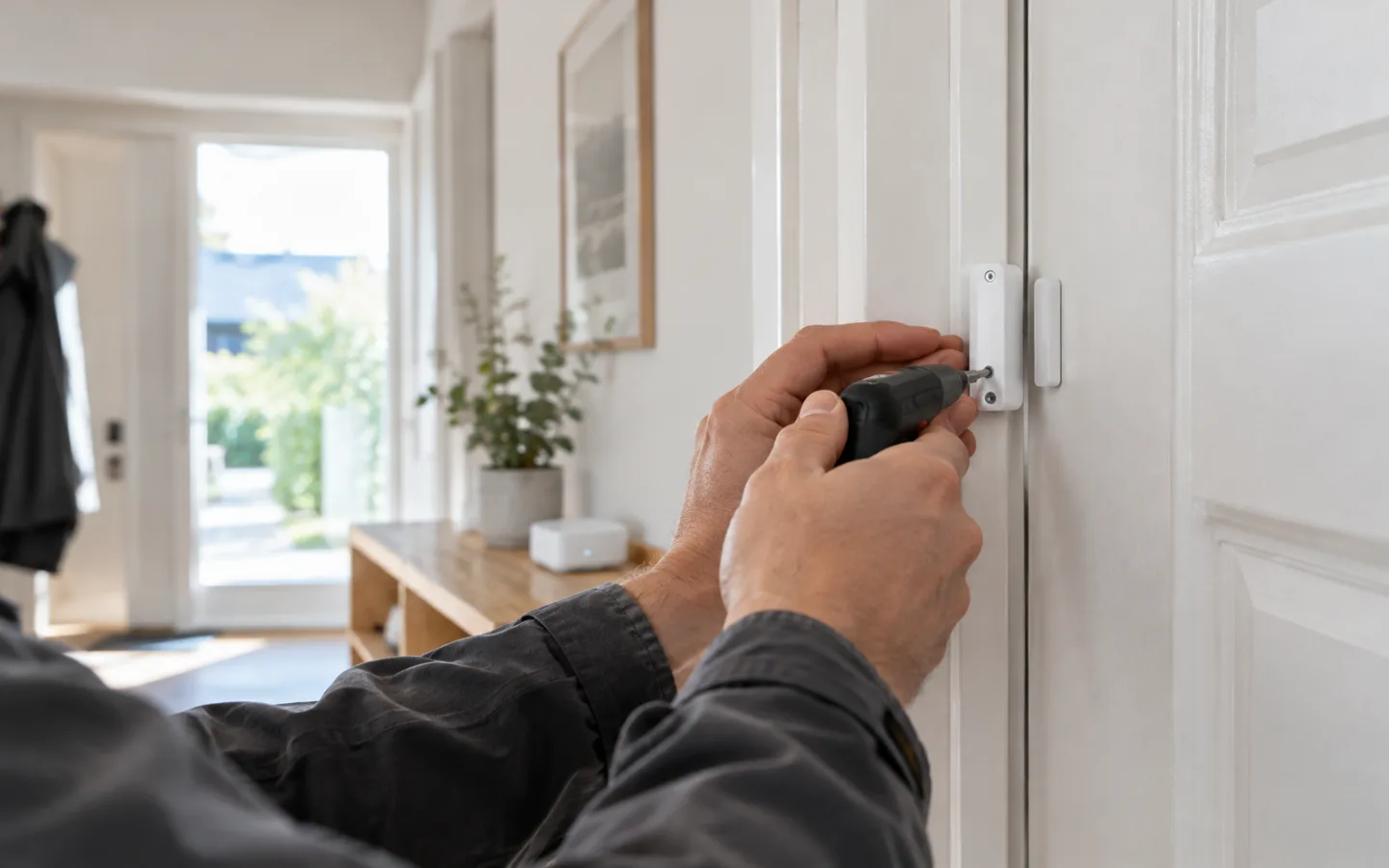
In a wireless system, the sensors run on batteries and send their signal by radio. In the GSMvalve system, the radio frequency is 868 MHz. The only cable is the hub’s power lead to the socket. The sensors are fixed with small screws.
Wireless or wired alarm system: comparison table
| Wireless | Wired | |
|---|---|---|
| Installation | one visit, usually a couple of hours | a cable to every sensor location, time depends on the building |
| Renovation and marks | no cable ducts, sensors are fixed with small screws | in a finished home, cable ducts or opening up walls |
| Reliability | radio connection, hub has a battery and SIM card | a cable doesn’t depend on radio coverage |
| Batteries | sensors have batteries that last for years, the app warns you in advance | sensors have no batteries |
| Expansion | a new sensor anywhere, up to 96 devices | every new sensor needs a new cable |
| Moving | a technician takes it down and installs it in your new home | the cables stay in the wall |
| Price | Start 385 € + installation 150 € or 17,36 €/month | depends mainly on the amount of cabling |
GSMvalve prices include VAT, and when you buy there’s a monthly fee of 9,18 €. We can’t quote a price for a wired system: it depends on how much cable has to be run and whether the walls are already finished. Ask the installer for it in writing, together with the scope of work.
Is a wireless alarm system just as reliable?
In an ordinary home, yes, if it’s installed correctly. Three things worth knowing:
- Radio coverage. Thick stone walls and long distances can weaken the radio signal. That’s why the technician picks a spot for the hub in the middle of the home and tests each sensor separately during installation, until the alarm reaches the phone.
- Batteries. This is the real drawback of a wireless system: the batteries need changing from time to time. The sensors run for years on one battery and the app shows their level, so a flat battery won’t come as a surprise.
- Power and connection cuts. The hub has a battery and a SIM card, so the alarm still gets through when the power or Wi-Fi is down. If someone pulls the hub out of the socket, you get an alert. With a wired system, ask the installer the same things: is there backup power and a mobile connection?
What matters isn’t whether the sensor is on a cable, but whether the alarm reaches a person even when the power and internet are down.
When is a wired alarm system better?
- A new house under construction. When the walls are open and the electrician is on site anyway, the cables can go in before plastering and finishing. Then the cable is invisible and the sensors have no batteries to change, ever.
- A very large site. A complex of several buildings, a large warehouse or a production building with long distances and a great many sensors. There it’s worth considering cable or a combined solution and having the site surveyed in person.
- A working wired system is already in the walls. If the cables are there and the system works, replacing it may not make sense.
When is a wireless alarm system better?
- A finished flat or house. No renovation: the technician screws the sensors to the wall and the hub plugs into a socket.
- A rented flat or plans to move. Only small screw holes are left in the walls, and when you move, the technician installs the system in your new home.
- A summer house. There’s no point running cables, the mobile connection works even where there’s no internet, and for winter you can add a water leak sensor (37 €).
- You want to expand the system later. A smoke detector, outdoor siren or outdoor motion sensor joins the same hub without a new cable. When you buy, extra devices don’t raise the monthly fee.
- A small office or shop. Installation takes one visit, without work having to stop.
Whichever you choose, ask the provider the same five questions: does the hub have backup power, does the alarm also go out over the mobile network, who gets the alarm on their phone, how much does an extra sensor cost later and what happens to the system if you move. With those answers, two offers are easy to compare, even if one is wired and the other wireless.
Tip. If you’re building a house and haven’t decided yet, ask the electrician to leave a socket for the hub in the middle of the home, not in the basement or a corner of the utility room. That works for both a wired and a wireless system and keeps your options open.
Our recommendation
If the walls are open and the house is still being built, consider cable. For a very large site, have it surveyed in person. In all other cases (a finished flat, a house, a summer house, a small business), a wireless system is quicker to install, easier to expand and comes with you when you move. In return, you’ll need to change the batteries from time to time.
Frequently asked questions
Does a wireless alarm system work during a power cut?
Yes. The sensors in the GSMvalve wireless system run on batteries, and the hub has a battery and a SIM card, so the alarm reaches your phone even during a power or internet cut.
How often do the batteries in a wireless sensor need changing?
The sensors run for years on one battery. The exact time depends on the sensor and how often it reacts. The app shows the battery levels, so you can see in advance which sensor needs a new one.
Is a wired alarm system cheaper than a wireless one?
That depends mainly on the cabling. In a house under construction, running cable is easier, while in a finished home you have to add opening up walls or cable ducts. The GSMvalve wireless Start package costs 385 € plus 150 € installation, including VAT, or 17,36 €/month to rent.
Can I take a wireless alarm system with me when I move?
Yes. The sensors are fixed with small screws and the hub is plugged into a socket, so a technician takes the system down and installs it in your new home. Only small screw holes are left in the walls.
Read also: how a wireless alarm system works · all packages and prices · leave your number
Written by the GSMvalve team
Still have questions?